Buy Backing Tracks Page

(e.g., Vocals, Lead Guitar, Saxophone)

(e.g., Live gigs, YouTube covers, Private practice) buy backing tracks

However, the use of purchased tracks also raises questions about authenticity in the digital age. Critics sometimes argue that "playing to a machine" strips away the spontaneity of live interaction. Yet, many performers view it as a new kind of discipline. Syncing with a high-fidelity track requires a different type of precision and stagecraft. It forces the performer to be the charismatic centerpiece of a controlled environment, turning a solo act into a cinematic experience for the audience. Syncing with a high-fidelity track requires a different

Beyond the sound quality, these tracks serve as a relentless, perfect rehearsal partner. Unlike a live band that might tire or fluctuate in tempo, a backing track is a digital metronome with soul. For jazz improvisers or blues guitarists, buying tracks in specific keys or styles provides a safe space to fail, experiment, and eventually master complex phrasing. It turns solitary practice into a dynamic session, bridging the gap between clinical scales and the emotional reality of a live show. Unlike a live band that might tire or

The primary appeal of purchasing backing tracks lies in the democratization of production. In the past, if a vocalist or instrumentalist wanted to hear their work supported by a lush string section or a tight funk groove, they needed a studio budget and a roster of session players. Today, a small investment in a professionally produced track provides a foundation built on high-end gear and expert mixing. This allows the artist to focus entirely on their performance, ensuring that the "envelope" of their sound is as polished as a major-label release.

Ultimately, buying backing tracks is about leverage. It is a strategic choice for the independent artist who needs to sound "big" without the overhead of a touring ensemble. By blending human talent with digital perfection, musicians can transcend their physical limitations, delivering a rich, immersive sound that would have been impossible just a few decades ago. In this light, the backing track isn't a replacement for a band—it’s an expansion of the artist’s own creative reach. To help you find the best audio for your project: (e.g., Jazz, Metal, Pop)

The modern musician’s journey has shifted from the smoky rehearsal room to the digital workstation, and with it, the "backing track" has evolved from a cheesy karaoke staple into a sophisticated professional tool. Buying high-quality backing tracks is no longer about finding a shortcut; it is about accessing a virtual world-class band that fits in a pocket, allowing soloists and songwriters to punch far above their weight class.
Command line utility

A cross-platform console application that can export and decompile Source 2 resources similar to the main application.

ValveResourceFormat

.NET library that powers Source 2 Viewer (S2V), also known as VRF. This library can be used to open and extract Source 2 resource files programmatically.

ValveResourceFormat.Renderer

.NET library providing an OpenGL-based rendering engine for Source 2 assets. Standalone rendering of models, maps, particles, animations, lighting, and materials with physically-based rendering (PBR).

ValvePak

.NET library to read Valve Pak (VPK) archives. VPK files are uncompressed archives used to package game content. This library allows you to read and extract files out of these paks.

ValveKeyValue

.NET library to read and write files in Valve key value format. This library aims to be fully compatible with Valve's various implementations of KeyValues format parsing.

C#
// Open package and read a file
using var package = new Package();
package.Read("pak01_dir.vpk");

var packageEntry = package.FindEntry("textures/debug.vtex_c");
package.ReadEntry(packageEntry, out var rawFile);

// Read file as a resource
using var ms = new MemoryStream(rawFile);
using var resource = new Resource();
resource.Read(ms);

Debug.Assert(resource.ResourceType == ResourceType.Texture);

// Get a png from the texture
var texture = (Texture)resource.DataBlock;
using var bitmap = texture.GenerateBitmap();
var png = TextureExtract.ToPngImage(bitmap);

File.WriteAllBytes("image.png", png);
View API documentation
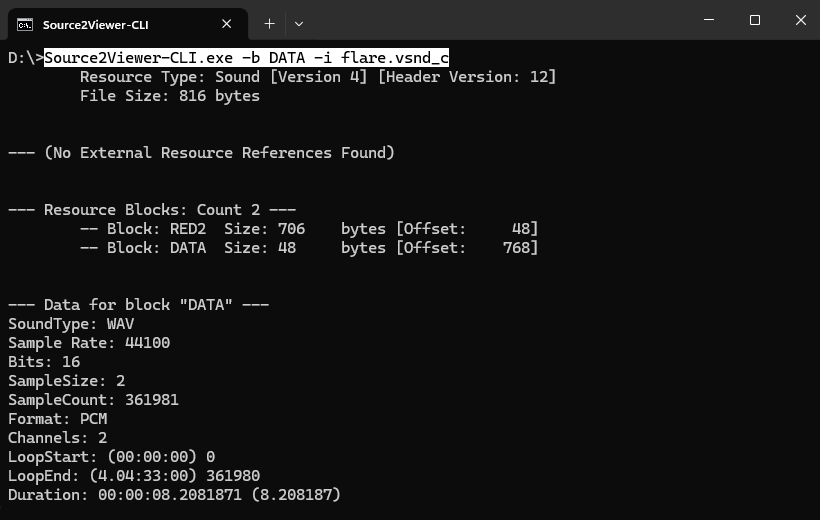
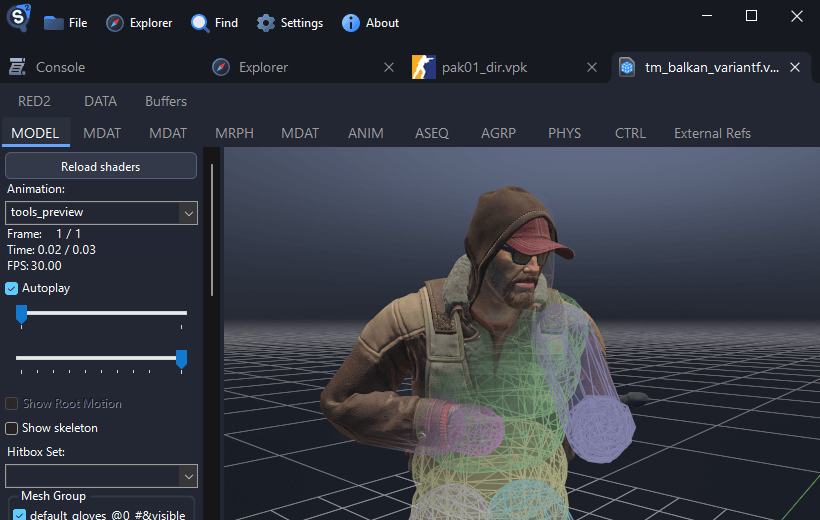
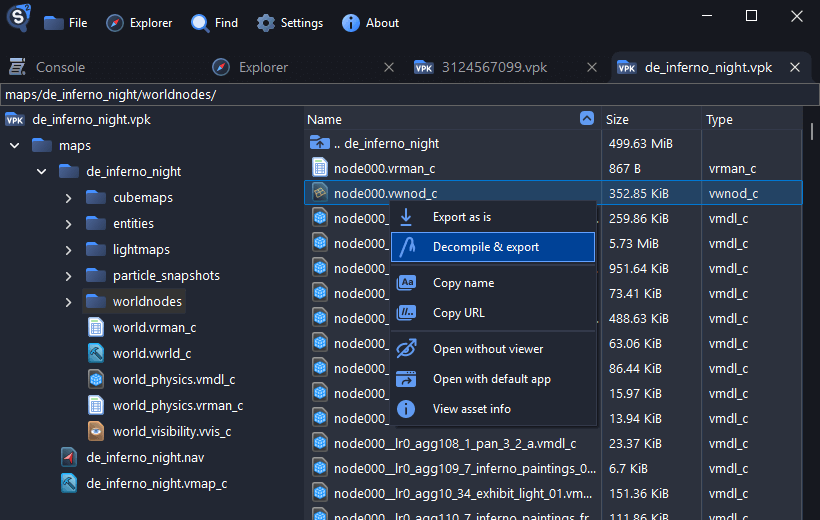
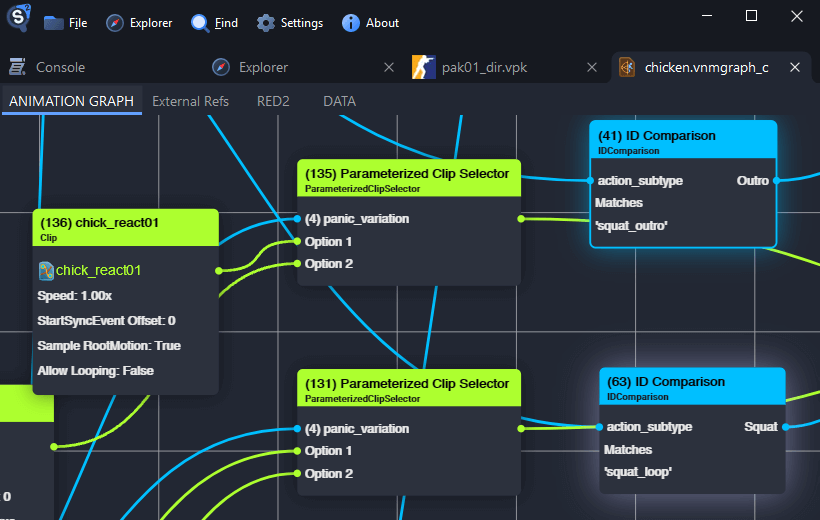
Screenshot of the 3D renderer displaying a Counter-Strike 2 player model on a grid Screenshot showing the VPK package explorer interface with a file tree and a list view Screenshot of the animation graph viewer showing nodes Screenshot of the command line interface showing DATA block for an audio file

(e.g., Vocals, Lead Guitar, Saxophone)

(e.g., Live gigs, YouTube covers, Private practice)

However, the use of purchased tracks also raises questions about authenticity in the digital age. Critics sometimes argue that "playing to a machine" strips away the spontaneity of live interaction. Yet, many performers view it as a new kind of discipline. Syncing with a high-fidelity track requires a different type of precision and stagecraft. It forces the performer to be the charismatic centerpiece of a controlled environment, turning a solo act into a cinematic experience for the audience.

Beyond the sound quality, these tracks serve as a relentless, perfect rehearsal partner. Unlike a live band that might tire or fluctuate in tempo, a backing track is a digital metronome with soul. For jazz improvisers or blues guitarists, buying tracks in specific keys or styles provides a safe space to fail, experiment, and eventually master complex phrasing. It turns solitary practice into a dynamic session, bridging the gap between clinical scales and the emotional reality of a live show.

The primary appeal of purchasing backing tracks lies in the democratization of production. In the past, if a vocalist or instrumentalist wanted to hear their work supported by a lush string section or a tight funk groove, they needed a studio budget and a roster of session players. Today, a small investment in a professionally produced track provides a foundation built on high-end gear and expert mixing. This allows the artist to focus entirely on their performance, ensuring that the "envelope" of their sound is as polished as a major-label release.

Ultimately, buying backing tracks is about leverage. It is a strategic choice for the independent artist who needs to sound "big" without the overhead of a touring ensemble. By blending human talent with digital perfection, musicians can transcend their physical limitations, delivering a rich, immersive sound that would have been impossible just a few decades ago. In this light, the backing track isn't a replacement for a band—it’s an expansion of the artist’s own creative reach. To help you find the best audio for your project: (e.g., Jazz, Metal, Pop)

The modern musician’s journey has shifted from the smoky rehearsal room to the digital workstation, and with it, the "backing track" has evolved from a cheesy karaoke staple into a sophisticated professional tool. Buying high-quality backing tracks is no longer about finding a shortcut; it is about accessing a virtual world-class band that fits in a pocket, allowing soloists and songwriters to punch far above their weight class.
Changelog

Made possible by amazing people

Source 2 Viewer is open-source and built by volunteers. Every contribution helps make it better for everyone.