By Gergely Orosz, the author of The Pragmatic Engineer Newsletter and Building Mobile Apps at Scale
Navigating senior, tech lead, staff and principal positions at tech companies and startups. An Amazon #1 Best Seller. New: the hardcover is out! As is the audibook. Now available in 6 languages.
The versatility of the 2.0.006 update lies in its diverse selection of beat patterns. Users are no longer restricted to a marker on every beat; they can choose to highlight every fourth beat, random syncopated rhythms, or specific subdivisions. This allows for more organic, less predictable editing styles while maintaining a cohesive structure. Furthermore, the ability to "bake" these beats directly into the metadata of the audio file or the sequence itself ensures that the rhythmic framework remains consistent even as the project scales.
Integration is the software’s strongest asset. Rather than forcing the editor into a third-party application, BeatEdit functions as a native-feeling panel within Premiere Pro. This minimizes friction and allows for real-time adjustments. When coupled with Premiere’s "Automate to Sequence" feature, BeatEdit becomes a powerhouse of efficiency, capable of assembling a rough cut of dozens of clips in seconds, all perfectly synced to the music.
BeatEdit 2.0.006 for Premiere Pro represents a critical evolution in rhythmic editing, transforming the arduous task of manual beat-matching into a streamlined, automated workflow. By leveraging advanced signal processing, this version provides editors with a precise musical map, ensuring that every cut, transition, and effect aligns perfectly with the underlying tempo of a project.
In conclusion, BeatEdit 2.0.006 is more than a utility; it is a creative catalyst. It shifts the editor’s focus from the technical tedium of counting frames to the higher-level artistry of storytelling. By automating the mathematical foundation of a rhythmic edit, it empowers creators to produce polished, professional content with unprecedented speed and accuracy.
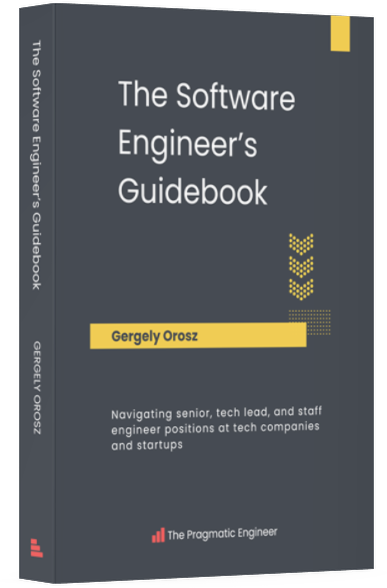
The book is separated into six standalone parts, each part covering several chapters:
Parts 1 and 6 apply to all engineering levels: from entry-level software developers to principal or above engineers. Parts 2, 3, 4 and 5 cover increasingly senior engineering levels. These four parts group topics in chapters – such as ones on software engineering, collaboration, getting things done, and so on.
This book is more of a reference book that you can refer back to, as you grow in your career. I suggest skimming over the career levels and chapters that you are familiar with, and focus reading on topics you struggle with, or career levels where you are aiming to get to. Keep in mind that expectations can vary greatly between companies.
In this book, I’ve aimed to align the topics and leveling definitions closer to what is typical at Big Tech and scaleups: but you might find some of the topics relevant for lower career levels in later chapters. For example, we cover logging, montiroing and oncall in Part 5: “Reliable software systems” in-depth: but it’s useful – and oftentimes necessary! – to know about these practices below the staff engineer levels.
The Software Engineer's Guidebook is available in multiple languages:
You should now be able to ask your local book shops to order the book for you via Ingram Spark Print-on-demand - using the ISBN code 9789083381824. I'm also working on making the paperback more accessible in additional regions, including translated versions. Please share details here if you're unable to get the book in your country and I'll aim to remedy the situation.
I'd like to think so! The book can help you get ideas on how to help software engineers on your team grow. And if you are a hands-on engineering manager (which I hope you might be!) then you can apply the topics yourself! I wrote more about staying hands-on as an engineering manager or lead in The Pragmatic Engineer Newsletter.
I've gotten this variation of a question from Data Engineers, ML Engineers, designers and SREs. See the more detailed table of contents and the "Look inside" sample to get a better idea of the contents of the book. I have written this book with software engineers as the target group, and the bulk of the book applies for them. Part 1 is more generally applicable career advice: but that's still smaller subset of the book.